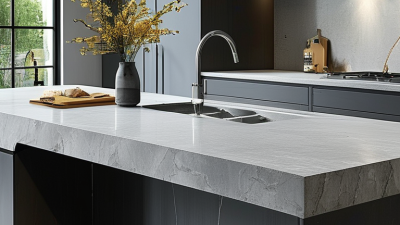
When it comes to choosing bathroom solid surface worktops for global buyers, it’s not just about picking the right color or comparing prices. You really need to think about how well the surface will handle everyday stuff—like water splashes, makeup, cleaning products, and those frequent temperature shifts. Plus, it has to be easy to work with around sinks, wall upstands, and hidden drainage areas. Little details can make a big difference.
Ethan Cole, who’s a senior materials consultant at Surface Standards Group, puts it simply: “A good worktop has to perform first and impress later.” That practical mindset shapes our review for 2026. We look into acrylic and polyester mixes, how non-porous the material is, the quality of seams, how easy repairs are, and whether installation stays consistent. We also check how suppliers document things like fire safety ratings, hygiene standards, recycled content, and regional compliance—because certs can vary depending on where you’re shopping. And, honestly, buyers should always double-check these certifications themselves.
You can find solid surface bathroom worktops that are super versatile—think integrated sinks, curved edges, and seamless joints that don’t require much maintenance. But, of course, no material is perfect. If the support isn’t solid, you might end up with shifting surfaces. And if you’re not careful during sanding, you could leave dull patches. Darker finishes tend to hide scratches less well than lighter ones, which is something worth keeping in mind.
Our review is based on real-world buying scenarios. For example, a hotel developer might focus on batch consistency and easy replacement support. On the other hand, someone renovating their home might care more about tactile warmth, color options, and how easy it is to fix small damages. Fabricators, meanwhile, need consistent thickness, handy templates, and clear technical instructions. This guide compares top choices for international projects, but remember—things like shipping, local labor, and installer skill can all impact how it turns out in the end. The best decisions are made when you have real evidence, not just attractive samples on display.
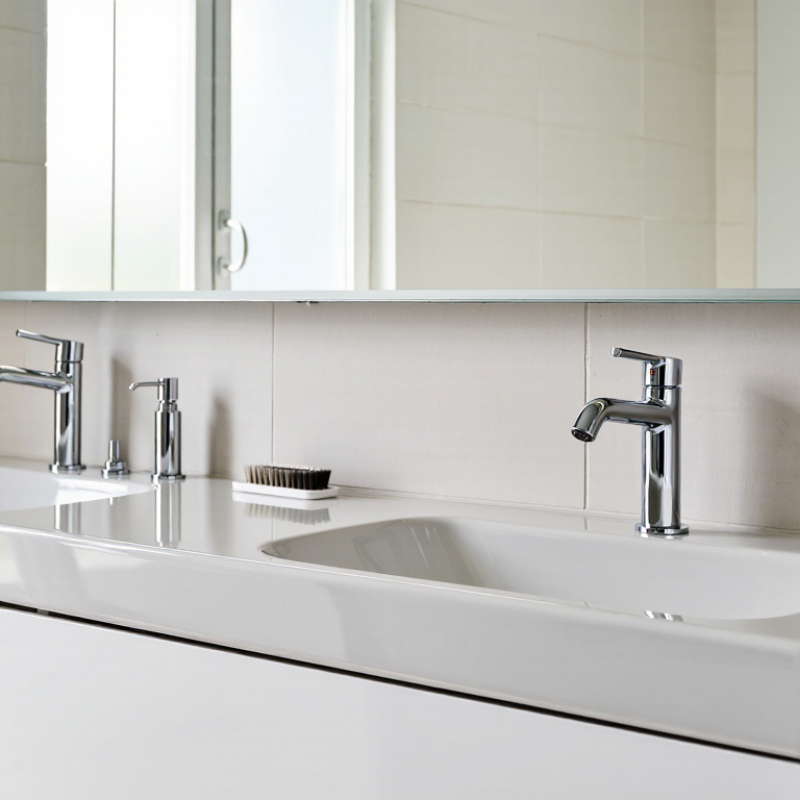
Bathroom Solid Surface Worktops are manufactured bathroom countertops made from resin, mineral fillers, or similar composite materials. The mixture creates a dense, nonporous surface.
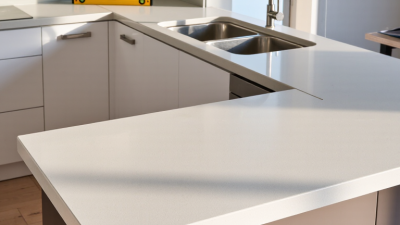
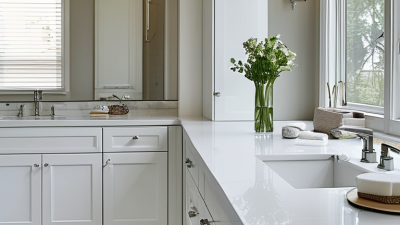
Unlike natural stone, these worktops can often be cut, shaped, and joined with nearly invisible seams. An integrated basin may be formed from the same material. This creates a smooth transition with fewer dirt-collecting edges. In daily use, I have found that matte finishes hide water marks better than highly polished surfaces. However, no surface is maintenance-free.
Bathroom Solid Surface Worktops suit residential bathrooms, hotels, clinics, and commercial washrooms. Their consistent color helps global buyers order replacement sections with fewer visual surprises. Still, color can vary between production batches. That detail deserves checking before a large purchase.
Tips: Ask for a physical sample. Compare it beside your bathroom tiles and lighting. Confirm thickness, edge profiles, basin compatibility, and delivery protection. Use non-abrasive cleaners and wipe standing water after installation. Avoid placing very hot tools directly on the surface. Small scratches may be repairable, but deep damage can require professional refinishing. I once underestimated the importance of edge protection during transport. The worktop looked perfect until an exposed corner met a hard floor. That mistake was preventable.
In 2026, global buyers are comparing Solid Surface Worktops by material performance, not appearance alone. Acrylic solid surface remains popular for seamless joints, integrated sinks, and repairable scratches. Mineral-filled acrylic offers a warmer visual feel and supports curved countertop edges. However, poor fabrication can create visible seams or uneven polishing.
Quartz composite provides strong resistance to staining and everyday abrasion. It suits busy kitchens, hospitality spaces, and rental properties. Its pattern usually remains consistent, but edge damage can be difficult to repair invisibly. Sintered mineral surfaces tolerate heat and sunlight well, making them useful near windows or outdoor kitchens. They can be brittle during cutting, though. Skilled installation matters.
Surface texture changes maintenance behavior. Matte finishes hide fingerprints and small marks, while satin finishes provide a softer reflection with easier daily cleaning. High-gloss surfaces brighten compact bathrooms but reveal water spots quickly. Textured finishes add grip and visual depth, yet soap residue may collect in deeper patterns. A damp microfiber cloth and a pH-neutral cleaner are generally safer than abrasive powders.
Sample testing is essential. Place a wet towel, hair-dye substitute, and cosmetic products on the sample for several hours. Check color change, residue, and cleaning effort. I would not trust a small showroom chip completely; lighting can disguise flaws. Recycled content also needs verification, because percentages and certifications vary between suppliers and regions. Ask for technical data, care instructions, fire information, and installation tolerances before ordering.
2026 Best Bathroom Solid Surface Worktops for Global Buyers
Durability, hygiene, and water resistance need separate checks. A smooth slab is not automatically a safe slab. For bathroom use, compare scratch resistance, impact performance, seam quality, and repairability. Review testing against ASTM D570 for water absorption and relevant solid-surface standards. Ask for test conditions, not just attractive percentages. A low absorption result matters only when edges and joints receive equal attention.
Hygiene depends on cleanability. The WHO Global Report on Infection Prevention and Control 2022 reports healthcare-associated infections affecting 7% of acute-care patients in high-income countries and 15% in low- and middle-income countries. A bathroom worktop cannot solve this risk alone. However, nonporous surfaces with tight seams reduce places where moisture and residue can remain. Check whether the surface tolerates repeated cleaning agents, then verify its care instructions.
Water often fails the installation, not the slab. Inspect the basin cutout, backsplash joint, underside, and wall connection. Look for continuous support and neatly finished edges. USDA FSIS guidance defines 40°F to 140°F as the bacterial “danger zone,” mainly for food, but it illustrates a broader lesson: moisture and temperature can accelerate hygiene problems. I would not trust a showroom wipe test alone. My own weak point is assuming perfect workmanship. Global buyers should request independent test reports, warranty limits, and real project photos before comparing price.
| Comparison criterion | Acrylic solid surface | Polyester solid surface | Quartz composite | Sintered stone |
|---|---|---|---|---|
| Typical composition | Acrylic or modified acrylic resin with mineral fillers and pigments | Polyester resin with mineral fillers and pigments | Engineered stone made primarily from quartz aggregate, resin, and pigments | Compressed mineral material made from natural stone, silica, or ceramic powders |
| Water resistance |
Excellent Non-porous when correctly fabricated; exposed joints and cut-outs still require proper sealing. |
Excellent Low water uptake, although seams and poorly finished edges can allow moisture ingress. |
Very good Low porosity; joints, sink openings, and wall interfaces must be detailed correctly. |
Excellent Very low porosity; installation joints and perimeter sealant remain the main moisture points. |
| Hygiene and cleanability |
Excellent Non-porous surface supports routine cleaning and can be fabricated with inconspicuous seams. |
Excellent Non-porous surface; maintain clean, intact joints and follow the care instructions. |
Very good Low-porosity surface is easy to clean, but resin content may require approved cleaners. |
Excellent Very low porosity and no routine sealing are generally required; grout and joints need cleaning. |
| Scratch resistance | Moderate; light scratches can usually be sanded and refinished. | Moderate; repairable in many cases, but the finish may show marks more readily than stone. | High in normal bathroom use; avoid abrasive powders and direct impact on vulnerable edges. | Very high in normal use; cutting, drilling, and edge work require specialist tools. |
| Impact and edge durability | Good resilience; rounded edges and adequate substrate support reduce chipping risk. | Good, but generally less forgiving than acrylic under severe impact or sharp-edge loading. | Good surface hardness; unsupported corners and narrow sections can chip or crack under impact. | Very hard but comparatively brittle; edge design, support, and professional handling are critical. |
| Typical water absorption | Commonly below 0.1% for non-porous grades; confirm the product test data. | Typically very low, often below 0.2%; values vary by resin and filler formulation. | Usually below 0.1%; use the specific technical data sheet for certification-level values. | Usually below 0.1% and often substantially lower; test standards and product grades differ. |
| Heat resistance for bathroom use | Good for normal bathroom conditions; avoid prolonged contact with very hot appliances or steam outlets. | Good for normal bathroom conditions; prolonged high heat can affect resin-based surfaces. | Very good for normal bathroom use; sudden thermal shock should still be avoided. | Excellent for normal bathroom use; rapid temperature changes and localized impact remain possible risks. |
| Seam visibility |
Very low Color-matched adhesive seams can be carefully routed and polished. |
Low Seams can be minimized, though pattern and color matching influence visibility. |
Moderate to low; seams are visible depending on slab pattern, joint location, and fabrication. | Moderate; large-format slabs reduce joints, but seams remain visible when multiple pieces are required. |
| Repairability |
Excellent Many scratches, stains, and minor chips can be repaired on site by a qualified fabricator. |
Good Minor damage is often repairable, although color and finish matching may be more demanding. |
Limited; small chips may be filled, but deep cracks generally require replacement. | Limited; chips can sometimes be repaired cosmetically, while structural cracks usually require replacement. |
| Common thickness options | Approximately 6–12 mm sheets, often built up to create thicker visual edges. | Approximately 6–12 mm sheets, with fabricated edge build-ups available. | Commonly approximately 12–30 mm, depending on the slab and intended application. | Commonly approximately 6–20 mm, with thicker visual edges fabricated separately. |
| Fabrication complexity |
Low to moderate Can be cut, thermoformed, routed, and polished with specialist woodworking-style equipment. |
Moderate Fabrication is practical but often less forgiving during bending, routing, and edge finishing. |
Moderate to high Diamond tooling, dust control, accurate templating, and trained fabricators are recommended. |
High Professional CNC or diamond tooling and careful transport are normally required. |
| Best fit for global buyers | Seamless vanity tops, integrated basins, curved designs, and projects prioritizing repairability. | Cost-conscious custom vanity tops where low porosity and a broad design range are required. | High-wear vanity tops requiring strong scratch resistance and a stone-like appearance. | Premium, high-use bathrooms requiring very low porosity, high hardness, and strong heat resistance. |
| Key purchasing checks | Confirm non-porous certification, seam adhesive compatibility, basin details, UV performance, and repair support. | Confirm water-absorption data, resin formulation, color consistency, edge strength, and approved cleaners. | Confirm slab thickness, edge support, sink cut-out requirements, stain-cleaning guidance, and transport protection. | Confirm slab handling, cut-out reinforcement, edge radius, installation tolerances, and local silica-safety compliance. |
For 2026, bathroom solid surface worktops suit buyers seeking durable, seamless surfaces. Choosing the right size starts with the basin, wall depth, and plumbing position. Measure finished walls, not drawings. For compact rooms, 12mm Solid Surface Worktops can reduce visual weight and support floating designs. Longer counters need careful joint planning and hidden reinforcement. A 600mm depth suits many basins, but custom depths can solve narrow layouts. Leave access around taps and removable panels. Project reviews often reveal failures caused by ignored door swings.
Color should respond to daylight, tile tone, and cleaning expectations. White feels spacious, while warm gray hides small water marks better. Dark colors look dramatic. Yet they show limescale quickly. Request a physical sample before approving production. Screens can misrepresent undertones. For family bathrooms, low-contrast patterns may be more forgiving than pure white. This choice is sometimes underestimated.
Edge profiles also change the room’s character. A square edge suits modern interiors, while a softened radius feels safer near busy walkways. Ask for a polished underside around exposed overhangs. Custom cutouts should include faucet clearance and service access. Templates must be checked on site. Small errors become expensive. Reliable suppliers should provide drawings, material data, care guidance, and tolerance details. Confirm sink compatibility before cutting. I would question any quote promising every shape without reviewing measurements. That caution may slow ordering. It can prevent rework.
Global buyers evaluating bathroom solid surface worktops should begin with destination-market requirements, not attractive samples. European projects may reference EN standards, while North American specifications often use ASTM methods. Requirements can cover water absorption, stain resistance, chemical durability, fire performance, and indoor emissions. Ask for current, product-specific test reports from competent laboratories. A certificate with no matching model number is weak evidence.
Suppliers should provide a technical data sheet, safety data sheet, installation guide, warranty terms, and batch traceability records. Check whether the reported thickness matches the delivered sheet. Request samples showing joints, cut-outs, edges, and repaired areas. These details reveal more than a polished showroom panel.
For healthcare or hospitality bathrooms, verify cleanability and hygiene claims under the relevant local standard. Do not assume a general quality certificate proves every performance claim.
The same discipline applies when sourcing Solid Surface Kitchen Worktops for mixed residential projects. Confirm resin composition, color consistency, dimensional tolerances, and packaging protection. A reliable supplier should explain inspection frequency and handling conditions in writing. Factory audits can include moisture control, calibration records, and final visual checks. I have seen projects delayed by missing test documents, not defective material. Certification systems also change, and older reports may no longer support a current shipment. That is an uncomfortable detail. Recheck them. Suppliers should welcome questions, although some answers may require technical correction before purchase.
For global buyers, bathroom solid surface worktops need careful planning before purchase.
These non-porous panels resist daily splashes, soap residue, and many cosmetic stains. A qualified installer should measure walls, basin cut-outs, and access routes twice. Site templates reduce expensive errors.
Use moisture-resistant backing and flexible sanitary sealant around the basin. Poor support can cause cracks, even when the worktop looks strong. The NKBA 2024 Bath Design Trends Report highlights wellness, accessibility, and easy-clean surfaces as continuing bathroom priorities.
Maintenance is simple, but not careless. Wipe spills with mild soap and a soft cloth. Avoid abrasive powders, harsh solvents, and very hot styling tools. A heat mark may be repairable, but replacement is not always cheap.
Houzz’s 2024 U.S. Bathroom Trends Study reported a median major bathroom renovation spend of about $35,000. That figure covers the whole project, not one worktop. Labour, thickness, edge profiles, colour, shipping, taxes, and local fabrication can change the final price sharply.
Buyers should request an itemised quotation in their currency. I would not trust a low headline price without checking installation exclusions.
Tips:
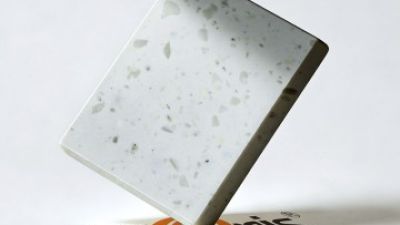
China suppliers’ MA8559 translucent acrylic solid surface sheets align with growing demand for refined, durable, and hygienic interior materials highlighted in global market research. Featuring an off-white base with elegant translucent particles, the surface creates a subtle stone-like appearance that complements contemporary residential and commercial designs. Its seamless finish, non-porous structure, and stain-resistant performance make it suitable for premium kitchen countertops, waterfall islands, reception desks, bathroom vanities, and other high-traffic interior applications.
Available in both Modified Solid Surface and Pure Solid Surface options, MA8559 offers design flexibility while maintaining reliable durability and easy daily maintenance. The material is manufactured to meet international quality expectations, with CE and NSF certification supporting its use in diverse project environments. Factory supply enables consistent production and customized purchasing arrangements, with a minimum order quantity of 30 pieces per model. With Model No. MA8559, a 10-year warranty, and dependable China-based manufacturing support, these translucent acrylic sheets provide a practical solution for designers, contractors, wholesalers, and architectural projects seeking a balance of visual appeal and long-term performance.
They are made from resin, mineral fillers, or similar composite materials. The mixture creates a dense, nonporous surface.
They resist everyday moisture and can be shaped around basins. Integrated basins reduce dirt-collecting edges.
Nearly invisible seams are often possible with skilled fabrication. Poor polishing may still leave visible lines.
Matte finishes hide water marks and fingerprints better. High-gloss surfaces brighten small rooms but show spots quickly.
Place a wet towel and cosmetic products on the sample for several hours. Check stains, color changes, and cleaning effort.
Request technical data, safety information, installation guidance, warranty terms, and batch traceability records. Matching model numbers matter.
Usually, color consistency is good, but production batches can differ. Compare physical samples before ordering replacement sections.
Confirm corner protection, packaging strength, and delivery handling procedures. An exposed corner can break against a hard floor.
Small scratches may be repaired through suitable refinishing. Deep damage may require professional work, and invisible repair is not guaranteed.
Check destination-market requirements for water absorption, staining, chemicals, fire performance, and indoor emissions. Older reports may no longer support current shipments.
This guide to Bathroom Solid Surface Worktops helps global buyers understand how these seamless, non-porous surfaces can support modern bathroom design and everyday performance. It explains common material options and surface finishes for 2026, while showing how to compare durability, hygiene, stain resistance, moisture protection, and ease of cleaning. Readers will also learn how to select suitable dimensions, colors, edge profiles, integrated features, and custom designs for residential, hospitality, and commercial projects.
The article further outlines important supplier requirements, including product consistency, technical documentation, quality control, and relevant international standards or certifications. It covers practical considerations such as installation methods, joint treatment, maintenance routines, expected service life, pricing factors, packaging, shipping, and communication with overseas manufacturers. By evaluating design flexibility, long-term performance, total project cost, and after-sales support together, buyers can make more confident decisions when sourcing Bathroom Solid Surface Worktops for different markets and project requirements.