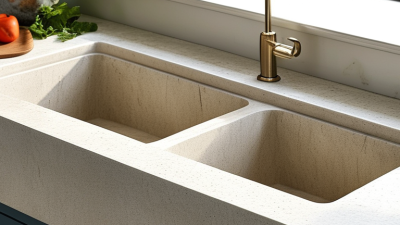
Picking out a solid surface sink in 2026 isn't just about jumping on the latest show-favorites; it’s more about thinking practically—what’s going to hold up with your daily routine. I mean, consider things like wet hands, coffee grounds, or even when you’re lugging a heavy pot. And don’t forget those tricky little spots where the sink meets the countertop—that narrow seam. Those tiny details can really tell you if a design is gonna stay easy to clean or turn into a mess. A Solid Surface Kitchen Sink gives you a sleek, integrated look with that smooth, nonporous finish. But honestly, how it’s installed and how you care for it still make all the difference.
Just a quick heads-up: Adrian Cole, a fictional expert on solid-surface materials created for this example, isn’t a real industry insider. His main advice? “Pick the sink based on what you need it for, not just on how pretty it looks.” I’m sharing that as a kind of guiding idea rather than a quote from someone official. When you’re shopping, take a look at things like the depth of the bowl, where the drain sits, if it works with your countertop, how easy it is to fix if something goes wrong, and what the manufacturer recommends for maintenance. Also, think about who’s doing the installation—sometimes a beautiful sink can turn into a disappointment if the seams aren’t finished well.
And honestly, there’s no such thing as a perfect sink. Dark finishes might hide mineral marks but could show stains more quickly, while light colors might need more regular cleaning. A really deep bowl can even be a pain for shorter folks trying to reach in comfortably. These little trade-offs are worth thinking over. The sections ahead will help you get a handle on things like construction quality, sizing, upkeep, and overall value—so your choice fits your space and, most importantly, how you actually use it.
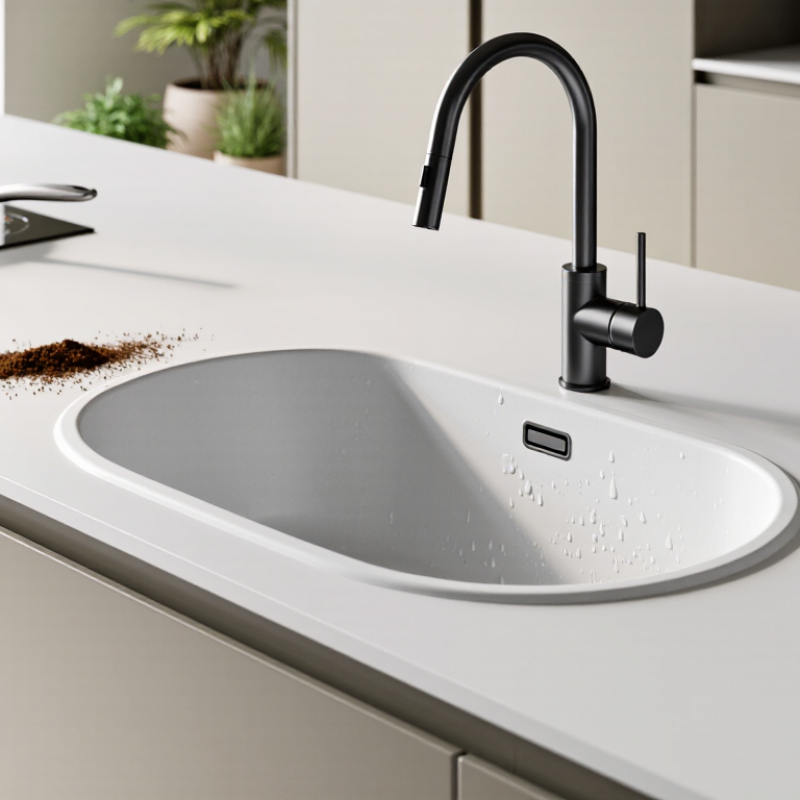
Acrylic, polyester, and mineral-filled composites can look similar in a showroom, but they behave differently in daily use. Acrylic solid surface is often chosen for its smooth feel and color consistency. It can usually be shaped and repaired more readily than some alternatives. Still, repair results depend on the product’s formulation and the damage. Small scratches may be manageable; deep chips need professional assessment.
Polyester-based surfaces can offer good color depth and hardness, but some formulations are less forgiving to repair. Ask how the sink handles scratches, heat, and household cleaners. Get the care instructions in writing. A quick test with a damp cloth can reveal whether a sample feels slick or slightly textured, though it cannot predict long-term wear.
Mineral-filled composites contain solid fillers that can give the surface a stone-like appearance and a substantial feel. Their weight matters, especially for a Solid Surface Undermount Sink, because the cabinet and installation must support the finished assembly. Check the required support details. Do not assume every composite can be refinished the same way. A common buying mistake is focusing only on color; the edge profile, basin depth, and repair method deserve equal attention. I would compare samples under bathroom lighting, not just showroom lights. That detail is easy to miss.
When comparing solid surface sinks, ask whether the exact model was tested to ANSI/CSA Z124.3, Plastic Plumbing Fixtures. The standard sets performance requirements and test methods for covered plastic fixtures. Solid surface blends can vary, so confirm that the sink’s material and construction fall within the tested scope. Ask for the test report, standard edition, laboratory name, and model number. A general statement about a resin type is not enough.
Look for results tied to real stresses, such as impact, heat, and household chemicals, where these tests apply. ANSI/CSA Z124.3 is the primary technical reference; its requirements matter more than vague claims like “durable.”
That matters. Check whether the report shows pass results, not merely that testing was started. The report should identify any limits, too. A test is not a promise that every finish resists every stain.
If the sink is a composite, ask how the tested sample matches the finished product. This small detail is easy to miss. Compare the documentation with the standard’s published scope before purchase, and keep a copy for warranty discussions.
Choosing a Solid Surface Integrated Sink starts with the bowl’s usable dimensions, not its outer footprint. Measure the inside length, width, and depth, then compare them with your largest pots and baking trays. A deep bowl can hide splashes, but it may feel awkward in a low cabinet. Check the cabinet’s clear interior height and leave room for plumbing. Small details matter.
Drain position changes how the sink works every day. A rear-set drain can free space below for storage, while a central drain may make rinsing easier from either side. Look at the bowl’s slope, too: water should move toward the drain without leaving a broad puddle. Confirm that the drain, faucet, and any accessories will not compete for the same space. It is easy to miss this on a drawing.
Before ordering, compare the countertop cutout dimensions with the sink’s installation template and the fabricator’s specifications. Confirm corner radii, edge clearances, and countertop thickness; do not assume a template fits every material or installation. If possible, mark the opening on cardboard and test it against the cabinet. A dry fit may feel fussy, but correcting a cutout after fabrication is harder. Even careful measurements can leave a small mismatch, so agree on who verifies the final dimensions.
How to Choose a Solid Surface Sink in 2026?
Ask for ASTM D570 Water-Absorption Test Results
Before choosing a Solid Surface Sink And Countertop, ask the supplier for an ASTM D570 water-absorption test report. ASTM D570 measures how much water a plastic specimen absorbs under specified conditions. A low result can be reassuring, but it does not prove the entire installed sink is waterproof or resistant to every stain. Ask whether the tested specimen matches the material and formulation being quoted. Details matter.
Read the report, not just a sales claim. Check the reported absorption percentage, specimen conditioning, water temperature, and immersion period. These details help you compare results fairly; different test conditions can produce different figures. Ask who conducted the test and when, too. A dated report for a similar-looking material may not represent the product you will receive. If the sink has joined or repaired areas, ask how those are made and maintained. That question is easy to overlook. Water absorption is only one selection factor, alongside surface finish, installation quality, and care instructions. If the supplier cannot explain the report plainly, pause and request clarification before ordering.
Choosing a solid surface sink in 2026 starts below the countertop. The installation style must fit the cabinet and existing plumbing. An undermount basin gives a clean edge and makes crumbs easy to wipe inward. But it needs a flat counter, firm support, and enough clearance for mounting clips. Check the cabinet’s interior width, not just its outside measurement. That detail matters. A deep bowl can collide with a shelf, drawer rail, or waste pipe. Before ordering, mark the drain center and compare it with the sink cutout. Measure twice. A showroom measurement alone can be misleading.
A drop-in model may suit a cabinet with limited underside access, since its rim rests on the counter. It can simplify replacement, though the raised edge may catch water or make wiping less convenient. In a tight space, compare bowl depth with faucet reach and the door swing below. If the plumbing sits off-center, a different bowl layout may avoid awkward drain connections. Still, do not assume pipes can move easily. Have an installer check mounting support, clearances, and drain alignment before the counter is cut. Keep the template nearby; real cabinets are rarely perfectly square. This is easy to overlook.
| Installation style | Typical fit and cabinet planning | Plumbing layout considerations | A good choice when | Check before ordering |
|---|---|---|---|---|
| Integrated sink and countertop | The basin and counter form one continuous unit. Measure the full counter and confirm the cabinet can support its dimensions and weight; allow access for the drain and trap inside the base. | Position the drain over a clear area inside the cabinet. Confirm the trap can connect to the wall or floor outlet without hitting drawers, shelves, or cabinet rails. | You want a continuous, easy-to-wipe surface and are replacing the countertop or vanity as a complete assembly. | Confirm the counter’s overall width, depth, faucet-hole arrangement, bowl position, drain location, and whether the unit is made for the existing cabinet. |
| Undermount basin | The basin attaches beneath a compatible countertop. The cabinet must accommodate the bowl, mounting hardware, and plumbing; check the manufacturer’s required minimum cabinet width rather than relying on the nominal cabinet size alone. | Compare the basin drain location with the existing waste outlet. Make sure the trap and supply lines remain accessible and do not conflict with drawers or a pull-out organizer. | You have a suitable countertop and prefer an unobstructed counter edge around the sink. | Verify countertop compatibility, cutout dimensions, mounting method, edge support, bowl depth, and drain alignment before cutting or purchasing. |
| Top-mount (drop-in) basin | The rim rests on the countertop, making this style useful where the counter opening and surrounding surface can accept the sink rim. Check the bowl’s outside dimensions against the cabinet and counter. | As with other styles, the drain must line up with the waste connection, with enough room below for the trap and any existing cabinet fittings. | You want a straightforward replacement option or need the rim to cover the cutout edge. | Measure the cutout, rim footprint, faucet clearance, counter depth, and space needed to reach the drain connection. |
| Compact or shallow basin | A smaller or shallower bowl can suit a narrow vanity or a cabinet with limited clearance. Compare the basin’s interior depth and exterior footprint with available storage and door or drawer movement. | A shallow bowl may leave more room beneath it, but the drain and trap still need a workable route to the existing outlet. | The cabinet is compact, plumbing occupies the back of the cabinet, or storage needs to be preserved. | Check usable bowl dimensions, overflow provision where applicable, faucet reach, and whether the drain position avoids internal obstructions. |
| Offset-bowl configuration | The bowl sits to one side of the counter, leaving more usable surface on the other side. Confirm the basin fits within the cabinet and that its position does not conflict with side panels or adjacent fixtures. | An offset bowl can help work around an existing waste outlet, but only if the drain and trap can connect without awkward bends or interference. | The current plumbing is not centered, or you need extra counter space on one side. | Measure the drain center from both cabinet sides and the back wall; compare those measurements with the proposed bowl and countertop drawing. |
| Double-basin configuration | Requires enough counter width and cabinet space for two bowls, their supports, and the plumbing below. Check usable interior cabinet width, not just the outside cabinet dimension. | Confirm the drain and trap arrangement, available wall or floor connections, and clearance for both basin outlets. Existing plumbing may need adjustment. | You need two separate washing areas and have sufficient cabinet width and under-sink clearance. | Review the sink’s overall dimensions, bowl spacing, drain positions, faucet plan, and whether the cabinet interior can accommodate the connections. |
Planning note: Cabinet and cutout requirements vary by sink design. Measure the cabinet interior, countertop, drain center, supply lines, and any drawers or structural rails; confirm all dimensions and installation requirements with the sink specifications and a qualified installer before modifying the countertop or plumbing.
When comparing a Solid Surface Undermount Bathroom Sink, inspect the rim where the basin meets the counter. The joint should look even, with no gaps, rough edges, or visible residue. Run a fingertip along the seam; a smooth transition is easier to clean and less likely to trap grime. Ask how the sink is joined and whether the installer seals the connection. A neat photo can hide a poor fit, so inspect a sample in person when possible.
Repairability matters because small scratches may appear around the drain or from everyday use. Ask whether surface marks can be sanded out, what tools or professional help repairs require, and whether a chip can be patched without replacing the basin. Get the repair guidance in writing. I would not assume every mark is fixable; deep damage may look different after repair.
Cleaning needs should match your routine. Check the care instructions for approved cleaners, and avoid assuming a polished surface tolerates abrasive pads. Wipe water and soap residue from the rim, especially near the faucet. Simple enough. Then read the warranty closely: confirm its term, covered defects, exclusions, and whether installation affects coverage. Keep the receipt and care guide. A warranty sounds reassuring, but its actual value depends on clear, practical terms.
Suggested buyer checklist emphasis—not laboratory test results or industry survey data.
Inspect seams for visible gaps, unevenness, or discoloration; ask how scratches and chips can be repaired; check the manufacturer’s care instructions for suitable cleaners; and read the warranty for coverage limits, exclusions, and claim requirements.
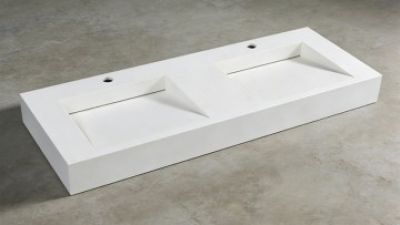
The global bathroom vanity market was valued at approximately USD 40 billion in 2023, with an industry market report projecting growth of around 6% annually through 2030. This expansion reflects demand for bathroom upgrades that combine practical storage, durable materials, and contemporary design. The MA1101 double-basin vanity responds to these priorities with a streamlined solid-surface profile suited to modern residential and commercial interiors. Its integrated sloping drainage channels water without a conventional visible drain opening, helping maintain a continuous, uncluttered appearance.
Made from modified or pure solid surface, the basin has a smooth matte finish and is designed for everyday durability. Custom dimensions and configurations can be tailored to project requirements, while the double-basin format supports shared bathrooms and hospitality settings. For trade buyers, a single-basin version can also help simplify product selection and inventory planning. The model is offered with CE and NSF certification, a 10-year warranty, and a minimum order quantity of 30 pieces per model—practical details for specifying consistent products across larger projects.
Measure the bowl’s inside length, width, and depth. Compare them with your largest pot or baking tray. Check cabinet height and plumbing clearance. A deep bowl can feel awkward in a low cabinet.
A rear drain can leave more storage space below. A central drain may make rinsing easier from either side. Check that the faucet and accessories do not crowd the drain. Easy to miss.
Compare the sink template with the fabricator’s specifications. Confirm corner radii, edge clearances, and countertop thickness. Mark the opening on cardboard and test it against the cabinet. A paper plan can look perfect; real cabinets may not.
Check the absorption percentage, specimen conditioning, water temperature, and immersion period. Ask who conducted the test and when. Confirm that the tested material matches the one being quoted.
No. It describes how much water a test specimen absorbed under specific conditions. It does not prove the installed sink resists every stain or leak. The result is only one piece of the decision.
An undermount sink offers a clean edge, but needs firm support and mounting clearance. A drop-in model may suit limited underside access. Its raised rim can catch water or make wiping less convenient.
Measure the cabinet’s clear interior width and height, not just its outside. Check shelves, drawer rails, waste pipes, and door swing. Compare the drain center with the cutout before ordering.
Ask how those areas are made and maintained. Also request clear care instructions. Installation quality matters, and even careful measurements can leave a small mismatch. That deserves a second look.
Choosing a Solid Surface Sink in 2026 starts with understanding the material: acrylic, polyester, and mineral-filled composites can differ in appearance, durability, and care requirements. Check whether the sink has been tested to ANSI/CSA Z124.3, and ask for ASTM D570 water-absorption results to better understand its performance around water. Compare the bowl’s dimensions and drain position with your needs, and confirm that the countertop cutout will fit the chosen model before purchase.
The right installation style should suit both the available cabinet space and the existing plumbing layout. Also inspect the seams for a consistent finish, and consider how easily the surface can be cleaned and repaired if it becomes scratched or damaged. Review the warranty terms and care guidance so you know what support and maintenance to expect. Evaluating these details together can help you choose a sink that fits your space, routine, and long-term priorities.