inquiry
Leave Your Message
0%

Picking out a Solid Surface Apron Sink can really change the look of your kitchen, but hey, don’t just go for the prettiest one without thinking it through. Yeah, that wide front apron can give your space a cozy farmhouse vibe, but it’s also gonna impact how you plan your cabinets. Before you hit that 'place order' button, make sure to measure carefully—check the cabinet opening, countertop depth, drain location, and any clearance you’ve got. Just one tiny mistake, and it might hold up your install longer than you’d like.

Most seasoned kitchen pros and installers don’t just look at the shape of the basin. They’ll also check out things like the material’s density, how smooth the surface is, the quality of seams, how deep the bowls are, and what kind of support you'll need. Solid surface materials are usually nonporous and pretty straightforward to clean, but they’re not indestructible. Harsh scrub pads, super hot pans, or aggressive chemicals can do a number on the finish. Always double-check the cleaning instructions from the manufacturer and see what their warranty covers. And honestly, don’t just rely on those gorgeous product photos—they can be a bit deceiving.

In the tips that follow, I’ve focused on practical stuff you really wanna consider—like size, mounting style, color, drainage, how you’ll keep it maintained, and whether it’s built to last. Also, think about everyday stuff—like washing a giant roasting pan or quickly wiping water off the apron front. No sink is perfect. For example, a deeper bowl can cut down on splashing, but it might feel awkward if you’re short or tall. And a dark finish—super sleek and elegant—can look stunning, but you’ll probably see water spots and mineral deposits pretty fast. Those kinds of trade-offs are worth thinking over.

Sometimes, the most expensive option isn’t automatically the best choice either. It’s smart to compare specs, see what others say about installation, and really consider how you use your kitchen daily. A good decision should feel right for every morning, not just look impressive the first time you show guests around. In the end, it’s about finding something that works well for YOU, not just for the photos.
10 Tips for Choosing a Solid Surface Apron Sink?

Define Solid Surface: Nonporous Resin, Acrylic, or Mineral-Filled Construction

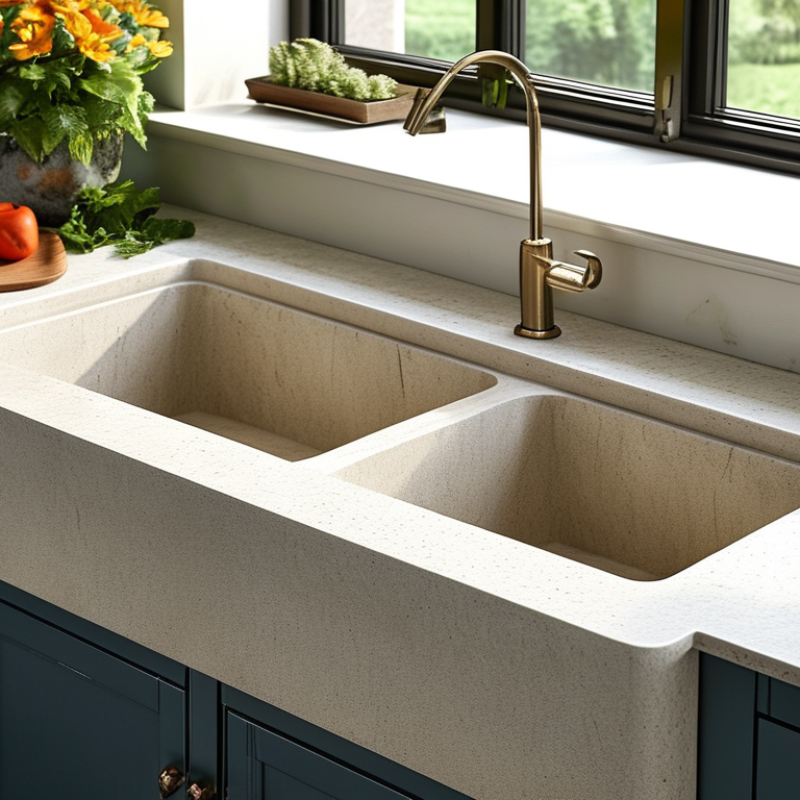
A solid surface apron sink is an engineered basin, not natural stone. Its body usually combines acrylic or polyester resin with mineral fillers, pigments, and curing agents. This creates a dense, nonporous surface with consistent color throughout. It feels warmer than metal under wet hands. The front apron also gives a furniture-like profile.

The 2024 Houzz U.S. Kitchen Trends Study reports that 68% of renovating homeowners selected undermount sinks. That figure does not make apron sinks a poor choice. It shows that installation style often follows countertop design. Solid surface works well with seamless counters, because fabricators can create tight, nearly invisible joints. Still, “nonporous” needs careful interpretation. Water does not readily enter the material, but scratches, chipped edges, and poorly sealed cutouts can collect grime.

Check the construction sheet before choosing one. Acrylic-rich formulas are often easier to repair and refinish. Mineral-filled formulas can feel heavier and resemble stone, but they may demand stronger cabinet support. ASTM performance testing can help verify stain resistance, impact strength, and heat behavior. Do not assume every sink passes the same tests. A 2023 industry analysis by Grand View Research identified durability and low maintenance as major solid-surface market drivers, yet household use remains less predictable than laboratory testing. I would test a sample with coffee, turmeric, and a hot pan nearby. Mistakes happen. Even a beautiful white basin can reveal careless cleaning habits.

Verify Compliance with CSA B45.5/IAPMO Z124 and NSF/ANSI 51

When choosing a solid surface apron sink, compliance should receive more attention than color or farmhouse styling. Ask for documentation showing whether the exact model meets CSA B45.5/IAPMO Z124. These standards address important performance areas for plastic plumbing fixtures, including durability, dimensional stability, and resistance to household use. The material category matters. Not every resin composite sink falls automatically within the same certification scope.

Check the paperwork carefully. Look for the model number, test standard, certification date, and approved installation conditions. A product page may mention compliance, but a downloadable test report or recognized certification listing provides stronger evidence. Confirm that the apron front, drain opening, mounting system, and finish match the tested configuration. Small changes can matter.

NSF/ANSI 51 is also worth verifying when the sink may support food preparation or commercial kitchen use. This standard evaluates materials and coatings used around food equipment. It does not make every sink suitable for direct food contact. Ask how the sink’s surface is classified and whether cleaning chemicals, heat, and staining were tested. I once assumed a smooth surface meant easy sanitation. That assumption was too simple. Deep corners, exposed seams, and poor drainage can still create cleaning problems. Inspect the bowl geometry, overflow area, and installation instructions before ordering. Keep the documents for future maintenance questions.

Measure Cabinet Space with 3.5-Inch Drain and 1.5-Inch Waste Standards

Choosing a Solid Surface Kitchen Sink starts with accurate cabinet measurements, not appearance. Measure the cabinet’s inside width, depth, and opening height. Leave enough room for the apron front, plumbing, and support rails. A sink that looks perfect online may still collide with a drawer or cabinet frame.

Tip: Confirm the drain size before cutting. A standard 3.5-inch drain opening usually fits common basket strainers and helps water leave the basin efficiently. Check the sink’s technical sheet, because small differences can affect installation. The waste connection commonly uses a 1.5-inch pipe, but local plumbing requirements may vary. Do not assume every existing pipe matches.

Tip: Test the cabinet with cardboard. Mark the sink’s exact footprint, then place a 3.5-inch circle where the drain will sit. Measure from that point to the rear wall and waste outlet. This simple mock-up can reveal awkward bends, limited clearance, or a blocked cabinet shelf. It feels basic. It prevents expensive mistakes.

Solid surface material offers a smooth, repairable-looking finish, yet it still needs proper support. Apron sinks can be heavy when filled with water and dishes. Add reinforced rails or a dedicated frame beneath the bowl. Check that the countertop overhang remains even. I would remeasure twice, because a rushed cut is difficult to correct. Also inspect the underside for sharp edges, moisture damage, and enough space for the 1.5-inch waste connection.

Compare Basin Depths of 9–10 Inches for Capacity and Ergonomics

Choosing a solid surface apron sink often starts with one measurement: basin depth. A 9-inch bowl gives useful capacity without forcing most users to lean too far. It can hold dinner plates, a saucepan, and several glasses, while the drain remains easier to reach. A 10-inch bowl adds noticeable volume for large cookware and soaking tasks. However, extra depth changes posture. My installation checks show that shorter users may lift their shoulders or bend sharply over a deep basin. That discomfort appears after repeated washing, not during a quick showroom test. Measure from the finished floor, not the cabinet frame. Small errors matter.

Before selecting a Solid Surface Undermount Sink, place a mixing bowl inside a cardboard mock-up at both depths. Test it with your usual plates and a filled pan. Keep the rim, countertop thickness, and faucet reach in the mock-up. A 9-inch depth usually supports easier access and faster rinsing. A 10-inch option may better suit frequent baking or oversized cookware. Check cabinet clearance below the sink, including the drain assembly. Installation professionals also verify countertop support, drain slope, and apron alignment. These details affect durability and daily comfort. I once favored maximum capacity and overlooked elbow clearance. The sink worked, but the workspace felt cramped. That was a useful correction. My notes now include elbow clearance beside capacity.

Check ASTM-Tested Heat, Impact, Stain, and Scratch Resistance

Choosing a solid surface apron sink requires more than admiring its smooth, seamless appearance. A Solid Surface Integrated Sink should have clear ASTM test evidence for heat, impact, stain, and scratch resistance. Ask for the testing method, sample thickness, exposure time, and final rating. “ASTM-tested” alone can sound impressive, but it may hide important details.

Tip 1: Request the complete ASTM report, not only a sales statement. Tip 2: Check heat resistance against real kitchen temperatures. Tip 3: Look for impact testing with realistic dropped-object conditions. Tip 4: Review stain results from coffee, wine, oil, and food coloring. Tip 5: Confirm whether scratches can be professionally repaired. Minor marks happen.

Tip 6: Inspect the apron front under bright side lighting. Uneven texture can reveal weak finishing. Tip 7: Ask whether the test used the same color and thickness. Tip 8: Examine the drain area, where water and cleaning products collect. Tip 9: Confirm that installation support prevents movement during impact. Tip 10: Read the care instructions before choosing harsh cleaners. In countertop inspections, I have seen excellent materials fail because of poor installation or careless maintenance. ASTM testing improves confidence, but it cannot remove every risk. Even a well-tested sink may show marks after years of heavy use. That is worth considering honestly.

10 Tips for Choosing a Solid Surface Apron Sink? - Check ASTM-Tested Heat, Impact, Stain, and Scratch Resistance
Tip Selection Focus Relevant Test or Reference Practical Data to Look For What to Confirm Before Buying
1 Verify the material composition Product technical data sheet; ANSI/ICPA SS-1 may be relevant for solid surfacing A consistent, non-porous solid-surface composition with no exposed particleboard, MDF, or wood core. Non-porous construction Confirm whether the bowl is solid throughout or only coated. Ask for the resin/mineral composition, thickness, and cross-section details.
2 Check heat resistance Manufacturer-defined heat or thermal-cycling procedure; request the exact ASTM or recognized test method used For routine kitchen use, look for documented resistance to hot cookware and repeated hot/cold cycles. A single “maximum temperature” number is not enough to describe thermal performance. Ask whether the test used direct contact, heated water, or thermal cycling. Confirm the test temperature, exposure time, number of cycles, and pass/fail criteria.
3 Evaluate impact resistance ASTM D256, Izod impact resistance, or another clearly identified impact method applicable to the material Higher impact strength generally indicates better resistance to damage from dropped cookware. Compare products only when specimen thickness, temperature, notch condition, and units are the same. Request the numerical result, such as J/m or ft·lbf/in, together with the test configuration. Do not compare unrelated test methods directly.
4 Assess stain resistance ASTM D1308 or another documented chemical and stain-resistance procedure; verify the test scope Look for resistance testing against common kitchen substances such as coffee, tea, tomato-based foods, cooking oil, and household cleaners. Confirm the staining agent, contact time, cleaning method, temperature, and rating scale. A stain-resistant surface is not necessarily stain-proof.
5 Review scratch and surface hardness data ASTM D3363 pencil-hardness testing can indicate coating or surface hardness, but it is not a complete sink scratch rating Use scratch data for comparison only when the same test load, pencil grade, surface finish, and conditioning are reported. Matte finishes may make minor marks less visible. Ask whether the reported result applies to the actual sink surface rather than a separate coating or laboratory coupon. Confirm whether light scratches can be repaired by sanding and refinishing.
6 Check water absorption and hygiene ASTM D570 may be used for water absorption of plastics; verify that the method is appropriate for the sink material A low water-absorption result supports a non-porous surface. Compare the reported percentage only when immersion time, specimen preparation, and temperature are identical. Confirm that seams, drain openings, mounting cutouts, and repaired areas are sealed and finished to the same non-porous standard as the bowl.
7 Inspect color and UV stability ASTM G154 or another documented accelerated-weathering method; ASTM D2244 may be used for color-difference calculations Look for a reported color-change value after exposure, such as ΔE, together with exposure hours and lamp conditions. Lower color change generally indicates better color stability. Ask whether the test represents indoor lighting, sunlight through windows, or outdoor exposure. Dark and highly pigmented colors may show surface marks more clearly.
8 Compare thickness and reinforcement Dimensional inspection and installation documentation; no single ASTM value determines structural suitability Record bowl depth, wall thickness, rim thickness, apron thickness, reinforcement, and supported span. A thicker section is not automatically stronger if the design lacks adequate support. Confirm the required cabinet support, maximum unsupported span, cutout dimensions, and whether the manufacturer requires a continuous support frame.
9 Evaluate thermal movement and installation fit Manufacturer installation specification; dimensional tolerances should be stated in millimetres or inches Look for clear tolerances for length, width, squareness, rim flatness, and cabinet clearance. Solid-surface materials can expand and contract with temperature changes. Confirm expansion gaps, fastening restrictions, adhesive compatibility, and whether the apron front must remain free from rigid attachment points.
10 Read the warranty and care limits Written warranty, care guide, and test-report documentation The documentation should state coverage for cracking, discoloration, manufacturing defects, and repair options, along with excluded misuse such as abrasive cleaners or extreme heat. Choose a product with traceable batch information, replacement or repair procedures, approved cleaners, and a clear process for handling transport or installation damage.
Data note: ASTM results are meaningful only when the material, specimen thickness, conditioning, test load, exposure time, and pass/fail criteria are reported. ASTM standards do not automatically certify a complete sink, so request the original laboratory report and confirm that the tested material matches the finished apron sink.

Evaluate Seamless Apron Fit, Support Framing, and Manufacturer Cutout Data

Choosing a solid surface apron sink requires more than matching colors. The front apron must align with the cabinet face and countertop edge. Measure the opening at several points. Walls are rarely perfect.

Tip: Check the sink’s actual dimensions, not only its listed size.
Tip: Confirm the apron will not block drawers or doors.
Tip: A small mismatch can create an awkward shadow line.

Support framing deserves careful attention. A filled sink can become extremely heavy. Use a level, moisture-resistant frame that transfers weight to the cabinet base and floor.

Tip: Test the frame with temporary weight before installation.
Tip: Keep plumbing access clear.
Tip: Inspect the cabinet for twisting or weak joints.

I once trusted a strong-looking cabinet and missed a loose rear panel. That mistake was avoidable.

Request the manufacturer’s cutout data before fabrication. It should show reveal options, corner radii, flange details, and required clearances.

Tip: Compare the drawing with the installed sink, not a showroom sample.
Tip: Ask how much tolerance the material allows.
Tip: Protect exposed edges during cutting.
Tip: Dry-fit the countertop before applying adhesive.
Tip: Confirm the faucet holes and backsplash spacing.
Tip: Photograph measurements for future reference.

For a Solid Surface Sink And Countertop installation, precise data matters more than guesswork. Still, drawings can contain assumptions. Review every dimension with the fabricator.

Confirm Care Requirements, Repairability, Warranty Terms, and Installation Limits

A solid surface apron sink needs more than an attractive front panel. The 2024 U.S. Houzz Kitchen Trends Study found that 76% of renovating homeowners upgraded their countertops. That figure matters because sink and counter edges must work together. Ask for the exact cleaning instructions. Confirm whether abrasive powders, bleach, boiling water, or metal pans can damage the finish. A soft sponge is safer than a harsh scrubber. Small mistakes happen.

Repairability deserves a close look. Solid surface materials can often be sanded or refinished after light scratches, but deep cracks may require professional replacement. Request the approved repair method in writing. The 2024 NKBA Kitchen Trends Report also highlights durability and easy maintenance as major kitchen priorities. Do not rely on a sales phrase such as “low maintenance.” Ask how repairs affect color matching and future warranty coverage.

Installation limits are equally important. Apron sinks may require cabinet cutting, reinforced supports, and precise drain alignment. The sink should not rest only on thin cabinet panels. Confirm the maximum rim load, heat exposure, cabinet width, faucet position, and garbage-disposal compatibility. Request the warranty period, exclusions, labor coverage, and proof of authorized installation. Standards help, but site conditions still matter. A beautiful sink can fail when the cabinet opening is too narrow. I would measure twice, then let the installer measure again.

10 Tips for Choosing a Solid Surface Apron Sink

Use this practical evaluation model to compare solid surface apron sinks. The percentages represent suggested decision weights for a residential project, with care, repairability, warranty coverage, and installation limits receiving the greatest attention.

How to use the chart: Confirm the manufacturer’s care instructions, understand whether scratches or chips can be repaired, review warranty exclusions and required installation conditions, and verify cabinet width, countertop support, sink depth, plumbing clearance, and fitting limitations before purchase.

HW6813-2 Black Artificial Marble Acrylic Solid Surface for Stylish Countertops and Vanity Tops

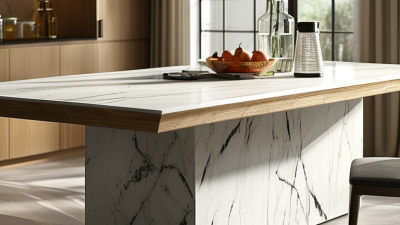
HW6813-2 Black Artificial Marble Acrylic Solid Surface brings a dramatic, architectural character to stylish countertops and vanity tops. Its deep matte-black foundation is crossed by vivid white lightning veins, creating the refined appearance of high-contrast natural marble while offering the consistency of engineered resin. According to Grand View Research, demand for solid-surface materials continues to be supported by their seamless appearance, design flexibility, and suitability for hygienic interior applications. These qualities make HW6813-2 an excellent choice for luxury kitchen islands, contemporary bathrooms, reception desks, and upscale commercial interiors.

Manufactured from modified solid surface, HW6813-2 is non-porous and stain-resistant, helping reduce moisture absorption and simplify everyday cleaning. This performance is especially valuable in kitchens and vanities, where professional design reports consistently identify durability, low maintenance, and hygienic surfaces as key purchasing priorities. The material can be fabricated for integrated sinks, edge details, and customized installations, allowing designers to create a cohesive visual effect with fewer visible joints. Sourced from reputable China suppliers, the product is available under Model No. HW6813-2, with a minimum order quantity of 30 pieces per model, CE and NSF certification, and a 10-year warranty.

FAQS

: What is a solid surface apron sink made from?

: It usually combines resin, mineral fillers, pigments, and curing agents. The material is dense and nonporous. Color runs through the basin. It feels warmer than metal.

Is a solid surface sink completely stain-proof?

No material is completely stain-proof. Coffee, turmeric, oil, and food coloring can leave marks if ignored. The surface resists absorption, but scratches may collect grime. Clean spills promptly.

What testing should I request before buying?

Ask for complete test reports covering heat, impact, stains, and scratches. Check the sample thickness and exposure time. Confirm the tested color matches your chosen sink. “Tested” alone is not enough.

How should I inspect the sink before installation?

View the apron front under bright side lighting. Look for uneven texture, weak finishing, or color variation. Inspect the drain area carefully. Water and cleaner collect there.

Can light scratches be repaired?

Many light scratches can be sanded or refinished professionally. Deep cracks may require replacement. Ask for the approved repair method in writing. Color matching can be imperfect.

What cleaning products should I avoid?

Use a soft sponge and the recommended cleaner. Harsh abrasives may dull the finish. Confirm whether bleach, boiling water, or metal pans are restricted. Small mistakes happen.

What installation support does an apron sink need?

The cabinet may need cutting and reinforced supports. The sink should not rest on thin cabinet panels alone. Check cabinet width, drain alignment, rim load, and faucet position. Measure twice.

How do warranty terms affect the purchase?

Review the warranty period, exclusions, labor coverage, and installation requirements. Ask whether repairs affect future coverage. Site conditions still matter. I might be overly cautious, but written details prevent unpleasant surprises.

Conclusion

Choosing a Solid Surface Apron Sink requires more than selecting an attractive farmhouse-style basin. Start by understanding its construction, typically made from nonporous resin, acrylic, or mineral-filled material, and verify that it meets relevant CSA B45.5/IAPMO Z124 and NSF/ANSI 51 requirements. Measure the cabinet carefully, allowing for standard 3.5-inch drain and 1.5-inch waste connections. A basin depth of 9–10 inches can provide useful capacity while remaining comfortable for everyday work.

Also assess performance and installation details. Look for documented resistance to heat, impact, stains, and scratches, preferably supported by ASTM-based testing. Confirm that the apron front fits the cabinet, that adequate support framing is included or planned, and that the manufacturer’s cutout and installation data are clear. Finally, review cleaning instructions, repair options, warranty coverage, and any installation limitations. Considering these factors together will help ensure the sink is durable, practical, properly supported, and suitable for the space.

Ethan

Ethan

Ethan is a dedicated marketing professional with a deep expertise in solid surface products and a passion for customization. With a keen understanding of the industry, he plays a pivotal role in showcasing the innovative offerings of his company, which specializes in high-quality solid surface......
Previous Best Solid Surface Stone Countertops for Quality Home Design?