+86 13828069877
Leave Your Message
-
Contact WhatsApp
-
 Contact Phone
-
 Contact Email

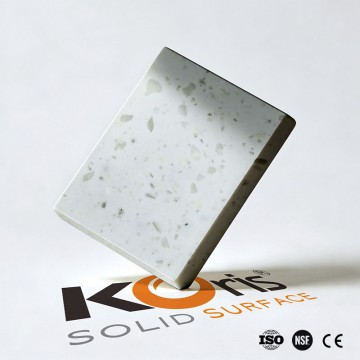
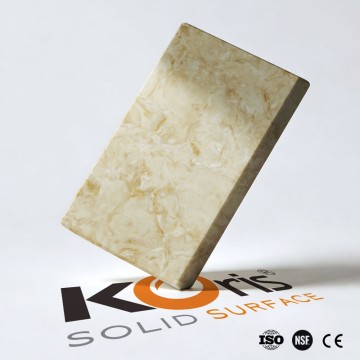
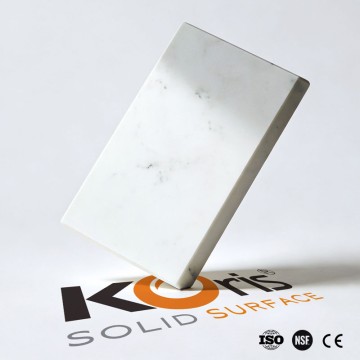
Analyzing the evolution of material demand in modern commercial food service environments.
In the competitive landscape of the commercial food and beverage industry, the design and functionality of the service counter play a pivotal role. Traditionally, coffee shops relied heavily on natural stone, quartz, or high-pressure laminates (HPL). However, the intensive demands of modern commercial coffee preparation—involving constant exposure to acidic liquids, dairy spills, high temperatures from espresso group heads, and continuous mechanical impact—have exposed the limitations of these materials.
Natural stones like granite and marble, while aesthetically premium, are highly porous and require regular sealing to prevent staining and bacterial colonization. Quartz, though denser, is prone to visible joints and cannot be easily repaired in-situ when chipped. Laminates, on the other hand, suffer from moisture ingress at the seams, leading to substrate swelling and delamination. This is where Solid Surface Acrylic has emerged as the industrial standard, offering a non-porous, homogeneous material structure that combines the durability of stone with the workability of hardwood.
Globally, the market for solid surface materials in commercial hospitality is experiencing a significant upward trajectory. Driven by the rapid expansion of boutique coffee chains and specialty cafes in urban centers, architects and interior designers are prioritizing materials that reduce maintenance downtime and offer long-term asset lifecycle value. The demand is particularly high for modified and pure acrylic formulations that exhibit superior resistance to thermal shock (near hot water dispensers and steam wands) and chemical staining (from coffee oils, milk proteins, and sanitizing agents).
Completely impervious to liquids, preventing coffee stains, milk absorption, and bacterial growth at the molecular level.
Inconspicuous joints allow for monolithic counter structures of unlimited length, eliminating dirt-trapping seams.
Scratches, minor burns, and chips can be sanded out and polished on-site without dismantling the entire service counter.
How technological integration and design aesthetics are shaping the next generation of cafe spaces.
The modern coffee shop service counter is no longer just a physical barrier between the barista and the customer; it is an active, technology-driven workstation. Future design trends point toward the integration of smart technologies directly into the countertop material. Acrylic solid surfaces are uniquely suited for this due to their machinability and homogeneous composition.
We are seeing an increase in counters featuring embedded wireless charging zones for customers, integrated touch-sensitive POS controls, and under-surface LED indicators. Furthermore, the thermal stability of acrylic allows for the seamless flush-mounting of modern under-counter espresso systems (like Modbar), where only the sleek tap heads are visible, leaving the countertop clean, open, and interactive.
Another major aesthetic trend is the use of translucent acrylic solid surface formulations. By utilizing materials with specific mineral filler ratios, designers can create service counters that glow from within. When combined with smart LED lighting arrays, the counter can change color temperature throughout the day—warm amber tones in the morning to create a cozy cafe vibe, transitioning to brighter, cleaner white light during busy lunch rushes. This capability transforms the counter into a dynamic focal point of the interior architecture.
As urban spaces become more digital, coffee shop designs are pivoting towards biophilic elements—incorporating organic shapes, soft curves, and natural textures. The thermoforming capability of acrylic solid surfaces allows fabricators to bend the material into complex, flowing curves. This eliminates the rigid, rectangular counter shapes of the past, allowing for ergonomic flow that guides customers naturally from the queueing area to the pickup station.
Understanding how acrylic solid surface performs across different zones of a coffee shop.
This is the high-stress core of the coffee shop. Here, the countertop is subjected to constant heat from boilers, vibration from commercial grinders, and continuous exposure to boiling water and acidic coffee grounds. Acrylic solid surface excels here due to its high density and heat-resistant properties. The seamless integration of drip trays and knock boxes directly into the countertop surface prevents water from seeping into the under-counter cabinetry, eliminating the risk of structural rot or mold.
The point-of-sale zone experiences heavy physical contact from customers, bags, keys, and payment terminals. Acrylic solid surface provides a warm, tactile feel that is much more inviting than cold stainless steel or glass. Its impact resistance ensures that dropped mugs or heavy POS equipment will not chip the edges, maintaining a pristine look even after years of high-volume transactions.
Self-service condiment bars are notoriously difficult to keep clean. Spilled milk, sugar syrups, and discarded cups create a messy, unhygienic environment. By utilizing acrylic solid surface, designers can create integrated waste chutes and molded-in sinks that are completely seamless. Baristas can easily wipe down the entire area with a damp cloth, as there are no seams, crevices, or silicone joints where bacteria and sticky residues can accumulate.

Core Narrative: Driven by Pragmatism, A Quarter-Century of Craftsmanship Enabling Boundless Design
In an era of accelerated internet communication where information can be difficult to verify, we deeply understand that what is truly trustworthy are the promises tested by time. The Koris story is about this steadfast, practical commitment, one that began in 1998 and spans over a quarter-century.
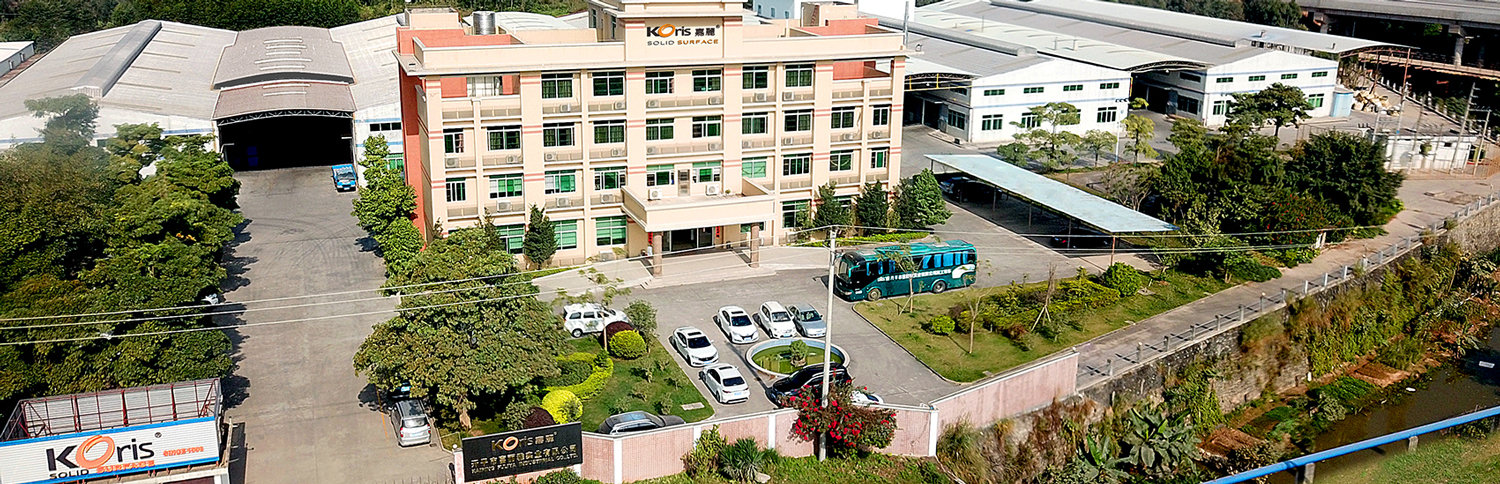
The Koris story begins in 1998. At that time, facing the high costs and long lead times of premium solid surface materials, as well as the general lack of character and depth in local materials, our founders established Koris with a pure passion for material science and a firm conviction in the industry's future. We believe we are not just manufacturing sheets; we are "customizing spaces for the future." We want every sheet manufactured by Koris to instill a sense of confidence and usability in designers and fabricators.
We did not want to be a distant supplier; we aspired to be an accessible, reliable, and solid partner for designers and procurement teams.
A truly excellent solid surface should be more than cold chemicals; it must embody a commitment to quality, responsibility for health, and respect for aesthetics.
Koris since 1998 has continually optimized its processes through practice, with experience serving design. This confidence stems from our strict selection of raw materials, meticulous attention to every batch, and unwavering adherence to delivery commitments.
Designers' desire for free-form curves never ceases. To meet this, we continually invest in R&D to refine our specialized polymer formulation, granting our sheets a longer thermoforming window and superior flexibility at molding temperatures.
The Result: Koris sheets can be molded into tighter radius curves than traditional materials. This means the buyer's project can achieve more sculptural, fluid, and complex geometries without sacrificing the material's strength and resilience.
At Koris, we offer not a promise of perfection, but consistent manufacturing experience since 1998, process transparency, and a commitment to continuous improvement.
● Commitment to Consistency: We use strict standardized formulas and process control, and we seal and archive samples for all export batches, meticulously recording production parameters to ensure high-precision matching for re-orders years later.
● Commitment to Durability: We strictly adhere to the industry-required sheet curing and maturing time, ensuring the polymer chain reaction is fully complete, allowing the material to achieve optimal hardness and durability.
Today, Koris is more than a solid surface factory; it is:
● A Trust Converter: We transform over a quarter-century of technical mastery and reverence for quality into absolute confidence for your project delivery.
● A Global Project Partner: We understand the challenges for buyers—communication costs, time differences, and varied standards. Koris's value lies in being the bridge between design and reality, ensuring blueprints are realized efficiently and precisely.
● Custom Color Matching Service: Whether you provide a Pantone color code or a physical sample (such as paint, ceramic tile, or an existing material chip), we have the capability—after a feasibility assessment—to provide you with a stable and cost-effective customized solid surface solution.
● Fabrication Expertise Sharing: A solid surface's final effect relies on fabrication. We are happy to share the expertise accumulated since 1998 in thermoforming, seamless joining, and installation maintenance, helping your fabricators successfully complete complex curves and shapes.