+86 13828069877
Leave Your Message
-
Contact WhatsApp
-
 Contact Phone
-
 Contact Email
Engineered for high durability, chemical resistance, and seamless installation in academic environments.
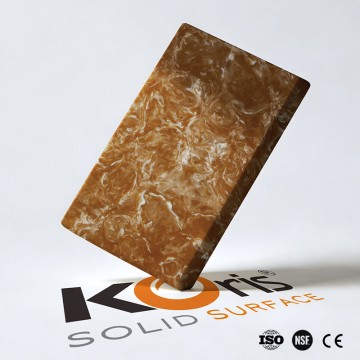
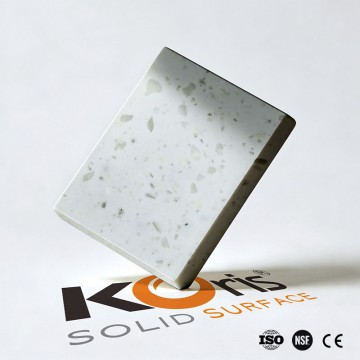
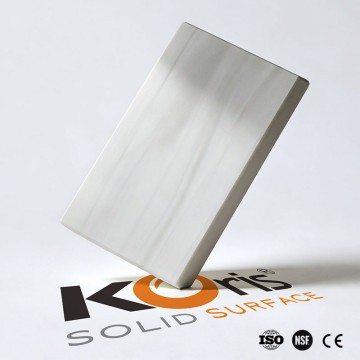
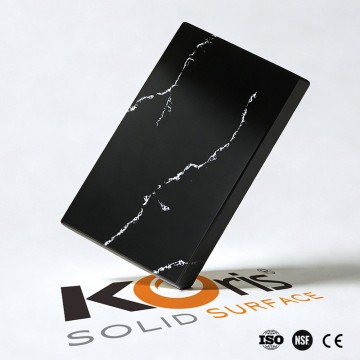
Understanding the shift from traditional materials to advanced solid surface technology in modern academic institutions.
The global educational infrastructure sector is experiencing a significant transformation. School laboratory design, once dominated by cold, industrial, and hard-to-maintain materials like epoxy resins, slate, or standard laminates, is pivoting toward high-performance composite materials. Among these, Solid Surface Marble has emerged as a premier choice for school laboratory benches, offering an optimal balance of structural strength, chemical resilience, and design versatility.
Unlike natural marble, which is porous and highly susceptible to chemical etching, acrylic solid surface marble is engineered using PMMA (polymethyl methacrylate) or modified resins combined with natural minerals. This creates an entirely non-porous matrix. In school environments where spills of acids, bases, and biological stains are daily occurrences, a non-porous surface prevents absorption, staining, and sub-surface degradation, ensuring a lifecycle that spans decades.
From a commercial perspective, school boards, university procurement offices, and educational architects prioritize life-cycle cost analysis (LCCA). While initial installation costs of premium solid surfaces might be higher than standard laminates, their repairability, seamless installation (which eliminates dirt-trapping seams), and resistance to impact significantly reduce long-term maintenance and replacement expenses. This makes it an economically sound investment for public and private educational projects worldwide.
How technological advancements and modern pedagogy are shaping the materials of tomorrow.
Modern schools are moving away from sterile, intimidating dark labs. Using marble-patterned solid surfaces provides a bright, calming, and visually stimulating environment that enhances student engagement and mimics real-world research facilities.
Hygiene standards in schools have escalated. The ability to seamlessly join solid surface sheets with integrated sinks and coved backsplashes prevents bacterial colonization, chemical pooling, and simplifies disinfection protocols.
Green building certifications like LEED require low-VOC emitting materials. Premium solid surface marble sheets are manufactured to meet strict emission standards, contributing to healthier indoor air quality in closed classroom environments.
Furthermore, the integration of technology within school laboratories has led to the design of smart benches. Solid surface marble can be easily fabricated, routed, and thermoformed to accommodate wireless charging pads, pop-up power outlets, data ports, and specialized scientific equipment mounts directly into the benchtop without risking structural cracks or aesthetic flaws.
Exploring how solid surface marble performs across different academic settings.
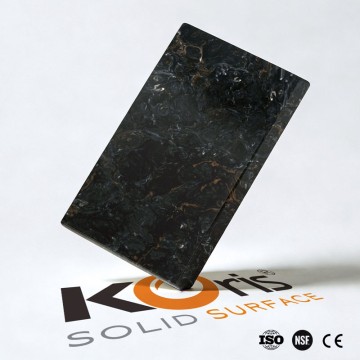
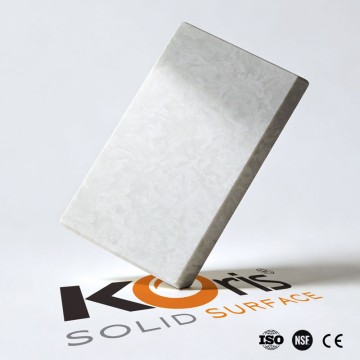
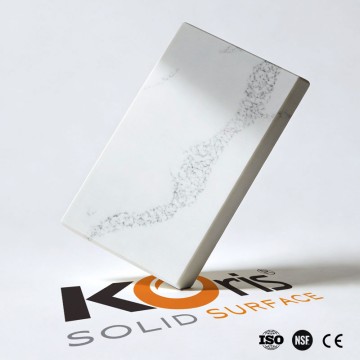
In high school and university chemistry labs, work surfaces are exposed to a wide range of reagents, including dilute acids, organic solvents, and staining agents like iodine. Koris solid surface marble sheets offer excellent resistance to these chemicals. Because the color and pattern run consistently throughout the entire thickness of the material, any surface discoloration or minor burns from Bunsen burners can be sanded down and polished back to its original state, a feat impossible with laminate or epoxy coatings.
Biology labs require sterile work zones to prevent cross-contamination during experiments. The non-porous nature of acrylic solid surface marble ensures that biological materials, bacteria, and mold cannot penetrate the surface. It is highly compatible with hospital-grade disinfectants and cleaning agents, allowing teachers and students to maintain a clean environment effortlessly.
STEM (Science, Technology, Engineering, and Mathematics) spaces and maker spaces are dynamic environments where students use heavy tools, 3D printers, and electronic components. The high impact resistance of modified acrylic solid surfaces helps absorb shocks from dropped tools, preventing chipping and cracking. The thermoforming capability of the material also allows for curved, ergonomic desk edges that reduce physical strain on students during long projects.

Core Narrative: Driven by Pragmatism, A Quarter-Century of Craftsmanship Enabling Boundless Design
In an era of accelerated internet communication where information can be difficult to verify, we deeply understand that what is truly trustworthy are the promises tested by time. The Koris story is about this steadfast, practical commitment, one that began in 1998 and spans over a quarter-century.
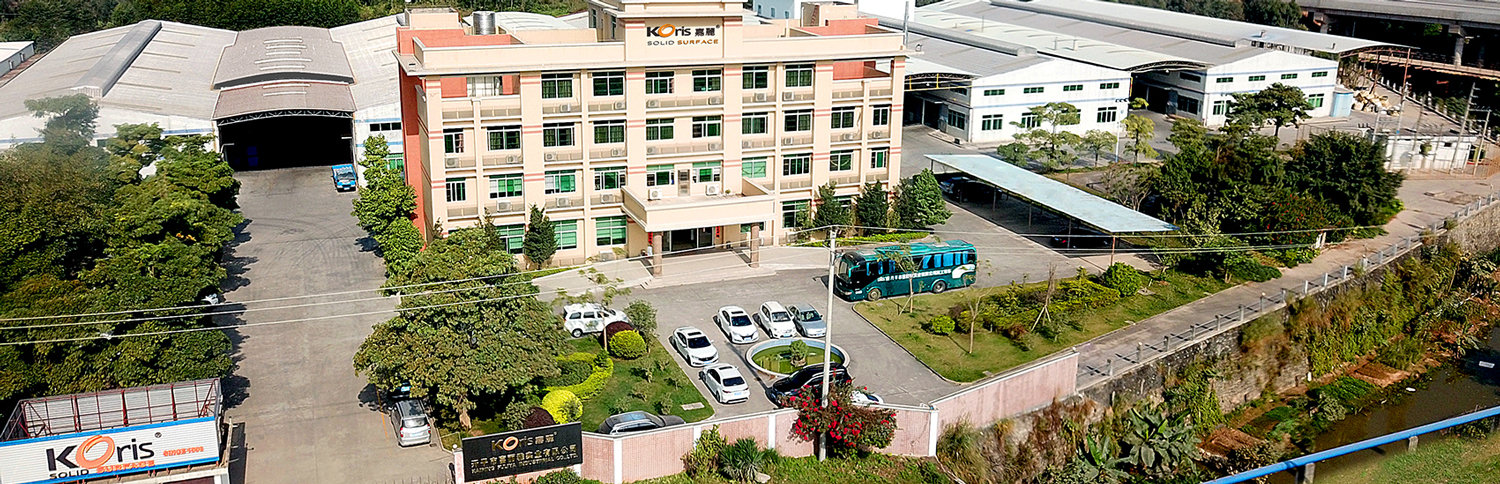
The Founding Principle that guides our manufacturing excellence.
The Koris story begins in 1998. At that time, facing the high costs and long lead times of premium solid surface materials, as well as the general lack of character and depth in local materials, our founders established Koris with a pure passion for material science and a firm conviction in the industry's future.
We believe we are not just manufacturing sheets; we are "customizing spaces for the future." We want every sheet manufactured by Koris to instill a sense of confidence and usability in designers and fabricators.
We did not want to be a distant supplier; we aspired to be an accessible, reliable, and solid partner for designers and procurement teams.
A truly excellent solid surface should be more than cold chemicals; it must embody a commitment to quality, responsibility for health, and respect for aesthetics.
Experience & Technology serving design, safety, and longevity.
Koris since 1998 has continually optimized its processes through practice, with experience serving design. This confidence stems from our strict selection of raw materials, meticulous attention to every batch, and unwavering adherence to delivery commitments.
Designers' desire for free-form curves never ceases. To meet this, we continually invest in R&D to refine our specialized polymer formulation, granting our sheets a longer thermoforming window and superior flexibility at molding temperatures.
The Result: Koris sheets can be molded into tighter radius curves than traditional materials. This means the buyer's project can achieve more sculptural, fluid, and complex geometries without sacrificing the material's strength and resilience.
At Koris, we offer not a promise of perfection, but consistent manufacturing experience since 1998, process transparency, and a commitment to continuous improvement.
● Commitment to Consistency: We use strict standardized formulas and process control, and we seal and archive samples for all export batches, meticulously recording production parameters to ensure high-precision matching for re-orders years later.
● Commitment to Durability: We strictly adhere to the industry-required sheet curing and maturing time, ensuring the polymer chain reaction is fully complete, allowing the material to achieve optimal hardness and durability.
The Bridge to Design and Flawless Project Execution.
Today, Koris is more than a solid surface factory; it is:
● A Trust Converter: We transform over a quarter-century of technical mastery and reverence for quality into absolute confidence for your project delivery.
● A Global Project Partner: We understand the challenges for buyers—communication costs, time differences, and varied standards. Koris's value lies in being the bridge between design and reality, ensuring blueprints are realized efficiently and precisely.
● Custom Color Matching Service: Whether you provide a Pantone color code or a physical sample (such as paint, ceramic tile, or an existing material chip), we have the capability—after a feasibility assessment—to provide you with a stable and cost-effective customized solid surface solution.
● Fabrication Expertise Sharing: A solid surface's final effect relies on fabrication. We are happy to share the expertise accumulated since 1998 in thermoforming, seamless joining, and installation maintenance, helping your fabricators successfully complete complex curves and shapes.
Specially curated designs to meet the highest aesthetic and functional demands of educational institutions.